
Studies in perception, memory, and living systems
This collection brings together watercolor, drawing, acrylic, and mixed-media works developed through close observation of animals, aquatic environments, botanical structures, and landscapes.
Each artwork begins with a visible subject and expands into questions about individuality, relationships, movement, and the environmental systems that surround it.
Explore the works individually to discover their materials, dimensions, artistic concepts, and the processes behind their creation.
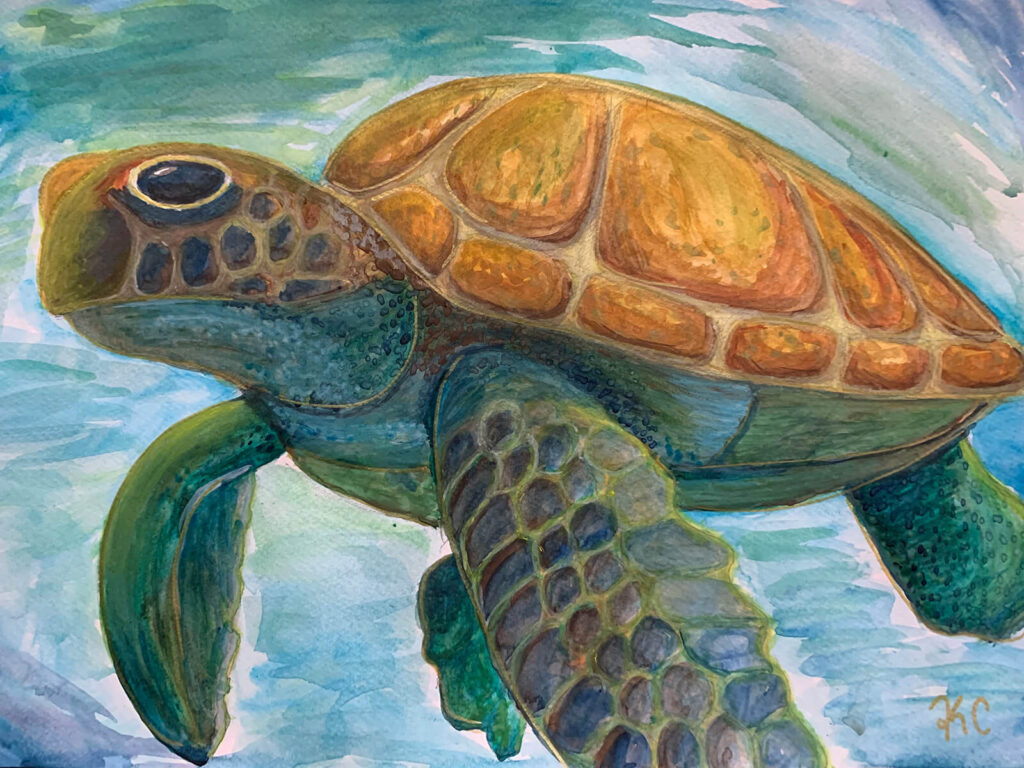
01. Sea Turtle — Aquatic Study
The sea turtle moves through a fluid environment where body, water, and light appear inseparable. Through layered color and expressive movement, the painting explores the relationship between an individual organism and the larger ecological world it inhabits. What appears to be a portrait becomes a reflection on interconnected life and the invisible systems sustaining it.
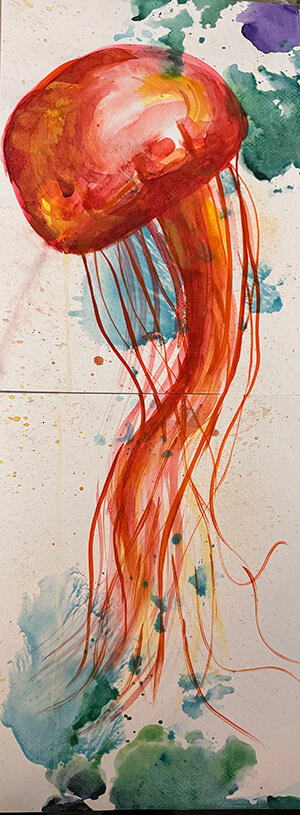
02. Jellyfish — Transparency Study
Suspended between presence and disappearance, the jellyfish becomes a study of fragility, movement, and transparency. Flowing lines and dissolving washes evoke a body that seems to emerge from its environment rather than exist apart from it. The work invites reflection on forms of life whose complexity often remains hidden beneath their delicate appearance.
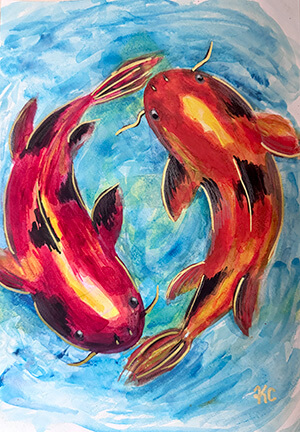
03. Koi — Aquatic Relationship Study
Two koi move through a shared current, their bodies creating a circular rhythm of color and motion. The composition explores connection, proximity, and the subtle relationships that emerge between living beings. Rather than portraying each fish independently, the painting emphasizes the space and movement that unite them.
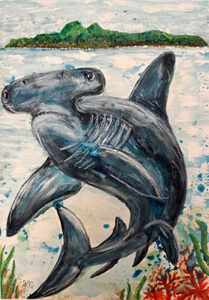
04. Shark — Marine Study
A hammerhead shark moves through an underwater landscape, its distinctive form expressing both strength and vulnerability. The contrast between the animal’s structure and the surrounding fluid environment creates a study of adaptation, movement, and ecological belonging. The work invites viewers to look beyond familiar perceptions of the shark and consider its place within a complex marine ecosystem.
Elephants — Studies of Memory and Presence
Through a series of interconnected compositions, the elephant is explored beyond a single recognizable image. Fragments of the face, body, and physical presence invite a closer examination of individuality, memory, and the relationship between what is visible and what remains beyond representation.
Each painting offers a different perspective, suggesting that understanding a living being is an ongoing process of observation rather than a complete visual conclusion.
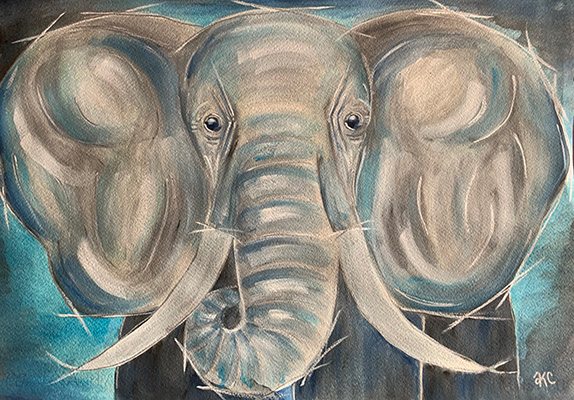
05. Elephant — Presence and Recognition
The elephant’s frontal gaze establishes a direct encounter between subject and viewer. Its monumental ears, textured skin, and subtle tonal variations reveal an individuality that extends beyond physical appearance. The painting considers recognition as an act of attention, inviting us to acknowledge the presence and complexity of another living being.
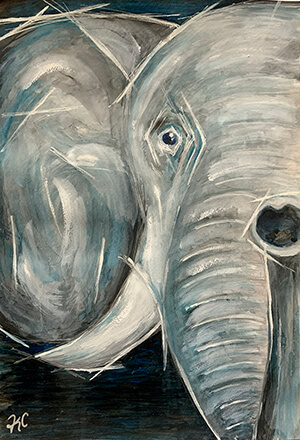
06. Elephant — Fragment of Memory
A close-up of the elephant’s face transforms a familiar animal into an intimate study of form, texture, and memory. By narrowing the composition, the work encourages attention to details that might otherwise go unnoticed. The fragment suggests that understanding does not always come from seeing the whole, but from observing what a single gesture or feature can reveal.
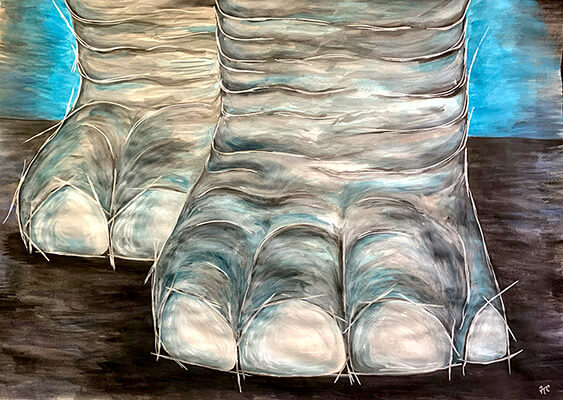
07. Elephant — Grounded Presence
The elephant’s feet become a visual exploration of weight, endurance, and connection to the earth. Through enlarged forms, layered textures, and contrasting tones, the composition shifts attention from the recognizable animal portrait to the physical experience of existence. As part of a broader study, the work suggests how fragments can carry the presence of an entire living being.
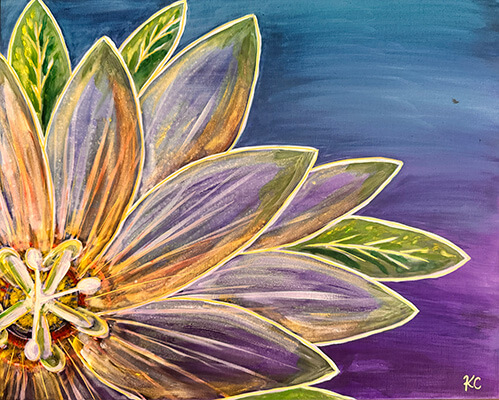
08. Passiflora — Botanical Structures
The intricate form of the passionflower becomes an investigation into the relationship between structure, color, and organic complexity. Radiating petals and contrasting tones create a composition that moves between botanical observation and expressive interpretation. The work invites viewers to discover the extraordinary visual systems contained within an apparently familiar natural form.
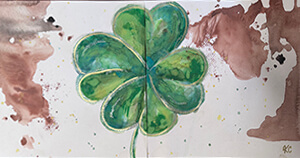
09. Clover — Small Forms, Hidden Meanings
A small botanical form occupies the center of an open, expressive composition. The contrast between its delicate structure and the surrounding spontaneous washes highlights the relationship between order and unpredictability. Associated with ideas of chance and possibility, the clover becomes an invitation to reconsider the significance we assign to ordinary elements of nature.
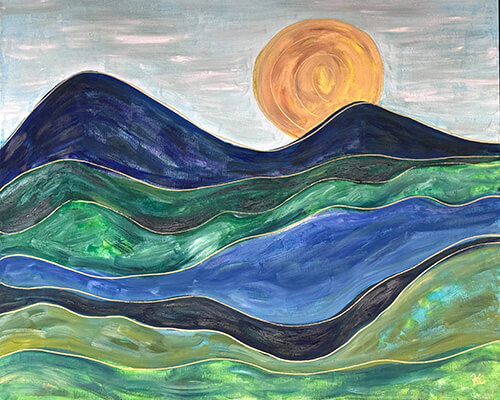
10. Mountains — Landscape Rhythms
Undulating bands of color transform the landscape into a sequence of movement, depth, and atmospheric relationships. Mountains, water, and a luminous sun are reduced to expressive forms that emphasize rhythm rather than geographic precision. The painting explores how memory and perception reshape the experience of place, allowing a landscape to exist between observation and abstraction.
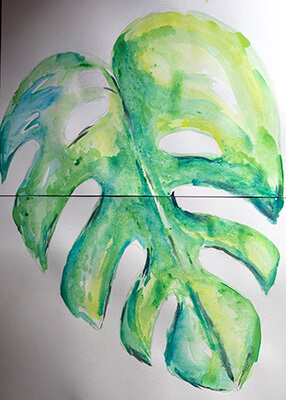
11. Monstera — Organic Geometry
The distinctive openings and flowing contours of a monstera leaf reveal a natural architecture shaped by growth and adaptation. Transparent greens, shifting edges, and overlapping tones emphasize the relationship between structure and movement. The work explores how even a single leaf can offer an intricate visual language of balance, transformation, and interconnected forms.
Beyond the Finished Image
Every artwork contains a history of observation, experimentation, and decisions that may not be immediately visible.
Discover how the works develop, from preliminary studies to the interaction of water, pigment, and layered marks.